Custom Apparel Guide · 14 min read
Women's Work Uniforms: The 2026 Buyer's Guide
Key takeaways
- Treat women's fit as its own pattern, not a smaller men's size. Rise, bust room, hip allowance, and torso length all change how a garment works on the job.
- Match styles and fabrics to the role, from client facing polos to trades and field service to active healthcare work.
- Size each position with real measurements and a short fitting session so you catch problems before the bulk order ships.
- Choose the decoration method for the garment. Embroidery suits polos and outerwear, while DTG and DTF handle softer and more varied fabrics.
- Set up a reorder workflow up front so every new hire gets the same consistent uniform.
You're probably dealing with one of two problems right now. Either your women's work uniforms were added as an afterthought to a men's program, or you've already learned the hard way that a shirt can look acceptable on a product page and still fail badly on the job.
That failure usually shows up in small complaints first. Sleeves catch on equipment. Pants drag. Front-desk staff tug at shirts all day. Techs layer their own clothing underneath because the issued pieces don't move or breathe well enough. Then the bigger costs show up: inconsistent branding, avoidable exchanges, slower onboarding, and in some roles, real safety exposure.
The buying decision is different when you treat women's work uniforms as a fit-and-function problem instead of a style exercise. Good programs account for movement, task demands, decoration method, reorder workflow, and compliance. That's what separates a uniform order from a uniform system. You'll find it organized by role in our women s work shirts with logo collection.
The Hidden Costs of an Ill-Fitting Uniform
A team member starts her shift by tugging down her shirt, rebuttoning a cuff, and rolling a waistband that keeps slipping when she bends. By lunch, she has adjusted the uniform a dozen times. That is not a minor comfort complaint. It is lost focus, inconsistent presentation, and in some roles, a real safety problem.
Ill-fitting women's work uniforms create friction all day. Sleeves catch. Hems drag. Pants pull at the thigh or gap at the back. Shirts bind across the shoulders during reaching and lifting. Employees compensate by changing how they move, how fast they work, and sometimes what tasks they are willing to do. That affects performance long before it shows up as a formal complaint.
Poor fit creates operational costs
The biggest mistake I see is treating women's fit as a smaller version of men's fit. It rarely works that way. Pattern shape, rise, bust room, hip allowance, sleeve length, and torso length all change how a garment performs on the job.
A poor fit also changes risk.
Extra fabric can catch on equipment, carts, door hardware, and storage edges. Tight fabric limits reach and makes lifting or driving more tiring over a full shift. In client-facing roles, constant adjusting reads as discomfort. In active roles, it can lead to overheating, skin irritation, or restricted movement.

Fit affects more than appearance. It affects how safely and efficiently the employee can do the work.
Practical rule: If employees keep adjusting a uniform during the shift, the garment is getting in the way of the job.
Where business owners usually miscalculate
The first misstep is buying by category instead of by task. “Women's polo” or “women's pant” tells you very little about mobility, heat retention, coverage during bending, or whether the garment still fits properly after repeated washing.
The second is trying to fix a uniform problem with accessories. Better socks, better layering pieces, and quality relevant industry guidance can make long shifts easier, but they do not correct a shirt that rides up or pants that restrict kneeling.
The third is focusing only on unit price. A cheaper garment that twists after laundering, loses shape, or generates frequent exchanges usually costs more over the life of the program. The better comparison is wear life plus replacement rate. The Arklavo cost per wash tool is useful for that kind of side-by-side check.
Here is what experienced buyers do instead:
- Choose cuts by role: Reception, warehouse, delivery, service, and clinical teams usually need different fits and lengths.
- Test movement during approval: Have employees reach overhead, sit, bend, lift, and get in and out of a vehicle before signoff.
- Track exchange patterns: Repeated swaps for the same style usually point to a pattern problem, not a difficult workforce.
- Set consistency standards by function: Keep branding consistent, but allow different garments where the job requires them.
That approach solves two problems at once. It protects brand consistency, and it gives women uniforms they can work in safely.
Choosing the Right Uniform Styles and Fabrics by Industry
The right style starts with the work itself. A polished women's quarter-zip that works in a showroom may fail in a clinic, and a durable trade shirt may look too heavy in hospitality. Buyers get better results when they match garment type, fabric behavior, and work environment instead of shopping by appearance alone.

Front-of-house and client-facing roles
Office teams, retail associates, hospitality staff, and practice administrators usually need a clean silhouette with enough comfort for long wear. In these settings, you can custom womens t shirts collection, or look at woven shirts, blouses, lightweight jackets, and structured knit tops, which also perform well.
Look for fabrics that hold shape without feeling rigid. Cotton-rich blends can feel more natural against the skin, while performance blends can help with heat and repeated washing. For branded programs, smoother face fabrics often decorate more cleanly and keep the logo looking consistent across reorder batches.
A few useful style rules:
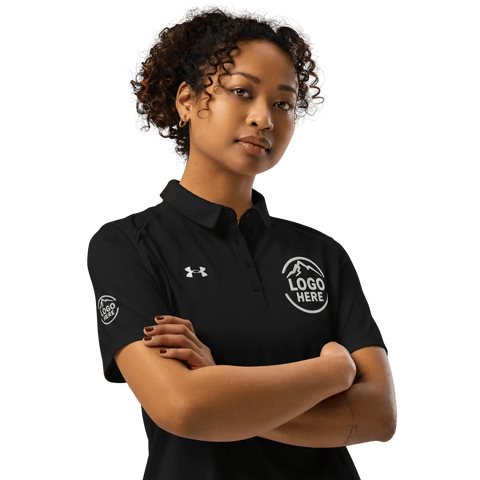
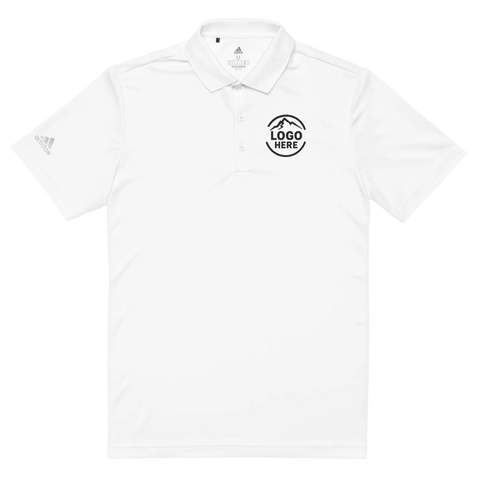
- Polos for broad consistency: They simplify fit across departments and work well for embroidery.
- Woven shirts for polished presentation: Better for reception, sales, and hospitality leadership roles.
- Lightweight layers for temperature swings: Vests and zip layers help when one building has hot kitchens and cold dining rooms or variable office HVAC.
- Avoid overly sheer fabrics: They create layering problems and complaints fast.
If you're building a mixed-role program, Arklavo solutions for women's professional attire show the kind of category split that helps buyers organize by role rather than force everyone into one garment.
Trades and field service
Construction, HVAC, electrical, landscaping, plumbing, and maintenance need a different standard. Here the uniform has to survive friction, kneeling, reaching overhead, and exposure to weather or dirty environments. That points buyers toward work shirts, utility pants, outer layers, and task-specific fabrics.
Women's cuts matter more here than most owners expect. A trade shirt that fits properly through the shoulder and chest improves motion and reduces the need to size up excessively. Oversizing may feel like a quick fix, but it creates loose fabric near tools, ladders, and machinery.
If a field uniform only fits when employees size up two levels, it doesn't fit. It just hangs.
For these teams, prioritize:
- Abrasion tolerance: Especially on knees, cuffs, and pocket areas.
- Coverage during movement: Bending, crouching, and climbing expose weak patterning fast.
- Layering compatibility: Base layer, work shirt, and outerwear should work together without bulk.
- Practical pocket placement: Storage should help the task, not distort the garment.
Healthcare fitness and active roles
Clinics, vet practices, gyms, studios, and service teams work in motion and usually indoors. Their biggest issues are heat buildup, restricted reach, and garments that look presentable at the start of the day but lose shape by the end of it.
Scrub tops, jogger-style scrub pants, stretch polos, and performance tees all have a place here. Moisture management, breathability, and recovery matter more than a dressier hand feel. In healthcare and active settings, buyers should also think about modesty during movement, especially with lighter colors and stretch fabrics.
Good choices usually share a few characteristics:
- Fabric with controlled stretch: Enough give for movement, not so much that knees and elbows bag out.
- Simple necklines and clean hems: Easier to wear across body types and under branded layers.
- Low-maintenance care: If the garment needs special treatment, staff won't follow it consistently.
- Consistent color depth: Important for branded sets and replacement orders.
Meeting Safety and Compliance Standards
A shirt that fits poorly is not just uncomfortable in a hazard zone. Loose sleeves catch, long hems interfere with harnesses and belts, and oversized FR gear can leave women rolling cuffs or sizing up for the chest and losing safe mobility everywhere else. That is where safety, fit, and performance meet.
What the rules mean on the job
If employees face flame or arc exposure, fabric choice is a safety decision first. Under OSHA's Apparel Standard (1910.269), employers must ensure employees exposed to flames or electric arcs do not wear untreated clothing made from acetate, nylon, polyester, or rayon, as these fabrics can melt and worsen injuries, according to OSHA's apparel interpretation.
For buyers, that means checking the actual hazard before approving a garment program. A branded quarter-zip, softshell, or base layer may look uniform-compliant and still be wrong for the task. In higher-risk settings, women's workwear may also need to meet EN ISO 13688 requirements for ergonomics, safety information, size marking, and material compatibility, along with garment-specific certification for flame resistance, antistatic performance, or arc protection where the role requires it.
Fit matters here more than many procurement teams expect. If a worker has to choose between chest room and sleeve control, or between hip ease and pant length, the garment may meet the label requirement but still create avoidable risk in daily use.
How to buy for the hazard without overspending
Start with the exposure list, not the product page. Identify heat, flame, arc, chemical splash, visibility, weather, and slip or crush risk. Then review how the job is done. Reaching overhead, climbing ladders, kneeling, driving, and tool carry all affect whether a compliant garment will work in practice.
Use that information to set the uniform program:
- Electrical and utility roles: Choose FR and arc-rated garments that match the task and the layering system. FR fabric selection is the role-specific starting point here.
- Construction and industrial crews: Check abrasion areas, visibility class needs, closure types, and whether outerwear works with required PPE.
- Cold-weather field service: Build the system as layers. Base layers and mid-layers can create compliance problems if they are selected only for warmth.
- Footwear and lower-body protection: Uniform safety continues below the waist. If your team needs help with toe protection and certification language, this guide to relevant industry guidance is a useful reference.
One practical rule saves a lot of mistakes. Do not approve any women's safety uniform without checking the garment spec, the certification, and the size run together. Compliance failures often start with a small assumption, such as treating a promotional outer layer as site-ready PPE or accepting a men's cut because it is available faster.
A Practical Guide to Sizing and Fitting Your Team
A uniform program usually goes off track before the first order ships. The common failure point is using guessed sizes, old men's sizing, or a generic S to XL range for roles that involve lifting, driving, climbing, squatting, or customer-facing work. That creates more than exchange costs. Poor fit can restrict movement, expose skin at the waist or wrist, interfere with PPE, and make employees look inconsistent even when the logo and colors match.
Start with measurements, not assumptions
Use actual body measurements against each brand's size chart. For women's work uniforms, chest, waist, hip, inseam, and torso length are the starting points. For technical garments, details such as shoulder width, sleeve length, rise, and front body length often determine whether the garment works on the job or sits in a locker.
Fit problems are still common across trade and service roles, especially where employers try to adapt men's cuts instead of buying garments designed for women. In practice, the issues repeat. Pants stack at the ankle and create trip risk. Sleeves catch on equipment. Shirts pull across the chest or ride up during reaching. Those are fit failures, not preferences.
A sizing process should be simple and repeatable:
- Measure each employee individually: Do not order from memory, manager estimates, or past uniform sizes.
- Check the size chart for that exact brand and style: Size labels are not standardized.
- Match fit to job motion: A receptionist, driver, technician, and nurse can all need different ease in the same garment category.
- Separate close fit from restricted fit: The garment should stay in place and allow full movement without binding, gaping, or excess fabric.
For teams that need a consistent process, a dedicated body measurement guide for uniforms helps standardize what gets measured and how.

Use a fitting workflow that catches problems early
Sizing on paper is only the first filter. The test is movement. I advise buyers to treat fitting as a short wear trial, especially for pants, outerwear, polos, and any item worn with PPE or tools.
OSHA's PPE rule requires protective equipment to properly fit each affected employee, and that standard has pushed many employers to take fit more seriously across the full uniform program, not only in certified PPE. A shirt that looks acceptable standing still can still fail once the employee sits in a vehicle, reaches overhead, or kneels repeatedly.
After measurements, run a short fitting process:
- Issue try-on samples first: This catches style and size problems before decoration and bulk ordering.
- Test real movement: Have employees bend, squat, reach, sit, walk, and, if relevant, climb in and out of vehicles.
- Record size by garment type: One employee may wear different sizes in a woven shirt, polo, jacket, and work pant.
- Set exchange rules before rollout: A clear window and process keeps the program on track and reduces frustration.
A visual walkthrough helps teams more than a spreadsheet alone:

There is also an operational benefit. Teams that build sizing around measured data, try-on samples, and role-specific fit notes usually see fewer exchange requests and faster onboarding. The other payoff is consistency. Employees get garments that fit their work, managers spend less time correcting order mistakes, and the finished uniform program looks intentional across the whole team.
Customizing Uniforms with Professional Branding
A clean logo won't rescue the wrong garment, but once the fit and function are right, branding turns a uniform into a consistent team standard. The main decision is usually decoration method.
How embroidery DTG and DTF differ
Each method has a job.
| Decoration Method Comparison | Best For | Durability | Cost (per unit) |
|---|---|---|---|
| Embroidery | Polos, jackets, hats, woven shirts, outerwear | High for everyday branded uniforms | Higher than print on many lightweight garments |
| DTG | Soft cotton-rich tees with detailed multicolor artwork | Good on the right fabric, less ideal for rugged abrasion | Often works well for smaller runs on suitable garments |
| DTF | Versatile logo application across many shirt types and blends | Good when applied correctly | Often practical for varied fabric programs |
Embroidery gives a structured, premium appearance and holds up well on polos, fleece, outerwear, and caps. It's usually the safest choice for office, retail, hospitality, and manager uniforms.
DTG works best when the garment itself is the feature, usually on softer tees with more detailed art. It isn't my first pick for heavy-use trade polos or textured outerwear.
DTF is useful when you need flexibility across mixed fabrics or want a cleaner print result on garments that don't suit DTG.
Shop-floor advice: Match the decoration to the garment's use cycle. A front-desk polo and a landscape crew tee don't wear the same way, so they shouldn't always carry the logo the same way.
What works on real uniforms
The most common branding mistake is placing a complex logo on a garment that can't support it cleanly. Fine text can get lost. Large chest prints can feel stiff. Heavy embroidery on a lightweight knit can distort the drape, especially on women's cuts.
A better approach is to decide based on three things:
- Logo complexity: Fine detail often needs simplification.
- Fabric behavior: Stretch knits, fleece, and woven shirts all take decoration differently.
- Wear pattern: Daily wash-and-wear uniforms need different decoration than event apparel.
For businesses standardizing polos, layers, and button-fronts, embroidered work shirts are usually the cleanest starting point. Arklavo also offers real-time logo previews, final proof approval, no minimum order quantity, and retained logo files for repeat orders, which is useful when you're managing reorders for new hires instead of one large annual purchase.
The Modern Ordering Process Start to Finish
Most uniform frustration has nothing to do with clothing. It comes from ordering friction. Missing sizes, confusing approvals, and shipments that don't match staffing reality are what stall programs.
A cleaner workflow for busy teams
A modern ordering process should feel more like managed procurement than a one-off apparel order.
Start with a quote request tied to actual roles. Separate front desk, field staff, managers, and seasonal hires if they need different garments. That avoids the common mistake of forcing one uniform package across very different jobs.
Then build the order in stages:
- Select garments by role: Not every employee needs the same shirt, layer, or pant.
- Approve branding with a final proof: This catches placement, scale, and spelling errors before production.
- Order samples or pilot units when needed: This is especially useful for women's cuts and outerwear.
- Ship by person or location: Multi-site delivery saves internal sorting time.
- Keep reorder data organized: Saved logo files and prior approvals reduce mistakes during onboarding.
For small employers, no-minimum ordering matters more than most vendors admit. It lets you add one new hire without buying a case pack. For larger teams, account management and repeat-order consistency matter more.
The strongest uniform programs are the ones that remain easy after the first rollout. If reorders are messy, the program won't stay consistent for long.
A good women's uniform program doesn't start with color. It starts with job demands, body-specific fit, and a reorder process your team can live with.
If you're updating women's work uniforms for a clinic, shop, field crew, restaurant, office, or multi-site team, Arklavo can help you sort through fit, decoration, and ordering options, the same ground our work uniforms for small businesses guide covers more broadly. Request a quote and build a program that matches the work.

See the full range before you read on
Every style, current price and decoration option in one place, so you can shortlist while the detail is fresh.
No minimum order
Compare styles and prices in one place
Every blank, weight and decoration option side by side, with current listed prices.
The value pick from this guide

No minimum order. Free digital proof before anything is made.
No minimum order. See your logo on the real product first.
Every price is listed. Free proof before anything is made.
Ordering for a team?
Get a quote for your whole team
You have seen the prices already, so a quote here is arithmetic, not a sales call. Send your quantities, sizes and product and we total the program from the same listed prices in this guide. No setup fees, no minimums.
Get a QuoteWho pays for required uniforms?
The Fair Labor Standards Act prohibits employers from requiring employees to pay for uniforms if such costs would reduce their pay below the federal minimum wage, as explained in this FLSA uniform guidance. Also, only clothing items the employer requires count as mandatory uniforms under that rule.
Can I order one item for a new hire instead of a full batch?
Yes, if your supplier supports no-minimum ordering. That matters for turnover, probation periods, and staggered onboarding.
Should every woman on the team wear the same cut?
Usually not. Keep the color and branding consistent, but allow different approved styles when roles or body shapes require them.
What's the safest way to launch a new uniform program?
Start with a small wear test. Measure the team, issue samples, collect feedback after actual shifts, then finalize the bulk order.
Is embroidery always the right branding method?
No. Embroidery is strong for polos, jackets, and hats, but printed methods can be better for lightweight tees or more detailed artwork.
How do I reduce exchange problems?
Measure first, use brand-specific size charts, and test movement before placing the full order. Exchanges usually come from rushed assumptions, not bad luck.
How should employees wash branded uniforms?
Follow the garment label, wash with similar colors, avoid overly harsh heat when possible, and don't assume every logoed item can be treated the same. Decoration method affects care.
Is ordering a size up a safe way to avoid fit complaints?
No. Oversizing looks like a quick fix, but it creates loose fabric near tools, ladders, and machinery, and extra fabric can catch on equipment, carts, door hardware, and storage edges. Going tighter is not the answer either, because tight fabric limits reach and makes lifting or driving more tiring over a full shift. Separate close fit from restricted fit: the garment should stay in place and allow full movement without binding, gaping, or excess fabric.
Which fabrics keep a logo looking consistent across reorders?
Smoother face fabrics usually decorate more cleanly and keep the logo looking consistent from one reorder batch to the next. Look for fabrics that hold shape without feeling rigid, and avoid overly sheer fabrics, which create layering problems and complaints fast.
Which styles suit front-of-house and client-facing roles?
Women's polos, woven shirts, blouses, lightweight jackets, and structured knit tops usually perform well in client-facing settings. Polos in particular simplify fit across departments and work well for embroidery, which is why they are a common starting point when a team wants broad consistency.
Every price is on the page. No form first.
No minimums, no setup fees, free proof.
Get a free quote
Priced from the listed prices on this page
Request sent
Keep browsing while you waitThat did not send
Something blocked the request on our side. Send it through the quote page and we will pick it up there.
Open the quote page