Custom Apparel Guide · 11 min read
Why Is Comfort Colors So Popular? The 2026 Merch Shift
Key takeaways
- Comfort Colors is now the most in-demand blank tee in America. This guide covers the data behind the surge, what actually changed, and what the garment-dyed 1717 means for any business ordering branded merch in 2026.
Comfort Colors is the hottest blank shirt in America right now, and the numbers back it up: the brand grew roughly 40% year over year in 2024 and U.S. Google search interest hit all-time highs in 2025. So why is Comfort Colors so popular all of a sudden, when the brand has been making the same garment-dyed tee for five decades?
That's the question this piece answers. We'll walk through the data behind the surge, explain what actually changed, and show what it means for any business ordering branded merch in 2026. Short version: your team shirt just got a serious upgrade option.
You can Comfort Colors custom t shirts as you go.
Key takeaways
- Comfort Colors grew roughly 40% year over year in 2024, per Gildan executives on earnings calls, and helped push Gildan's activewear category up 6% in the same period.
- U.S. Google search interest for the brand spiked to all-time highs in 2025, a signal that demand is still climbing, not cooling.
- Gildan bought Comfort Colors for about $100 million in 2015, back when the brand did roughly $95 million in annual sales. The bet paid off a decade later.
- The look driving it all is garment dyeing: each shirt is dyed after it's sewn, which produces the soft, washed-down, vintage color Gen Z can't get enough of.
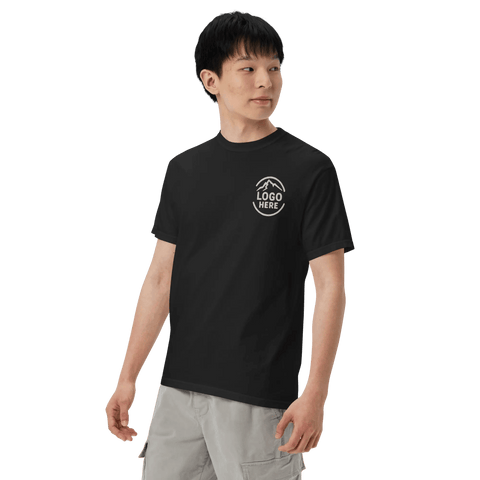
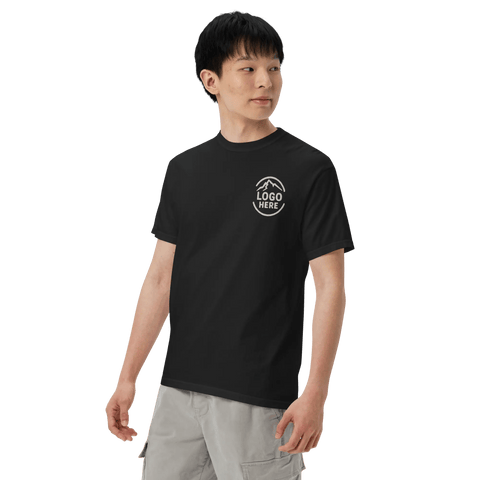
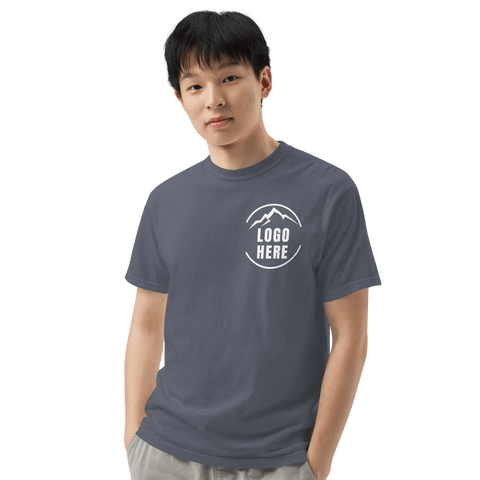
- Gen Z adopted it first: sororities, fraternities, college groups, and coastal lifestyle brands made the blank a status piece, often with a small embroidered chest logo.
- For businesses, the workhorse is the 1717 tee: 6.1 oz, 100% ring-spun U.S. cotton, relaxed fit, and a surface that takes both embroidery and DTG printing well.
- 2026 is the brand's 50th anniversary, with new women's silhouettes previewed and extensions into hats and bags reported, so the trend has room to run.
Thinking about this blank for your team?
Our full guide to custom Comfort Colors tees covers blanks, decoration, and ordering.
custom Comfort Colors t shirtsWhat's actually driving the Comfort Colors surge
Comfort Colors is surging because hard demand caught up with a fifty-year-old product: the brand grew about 40% year over year in 2024, lifted Gildan's whole activewear category 6%, and pushed U.S. Google search interest to record highs in 2025. Those aren't influencer-hype numbers. They come from Gildan's own earnings calls and from relative search volume data reported by CNBC in October 2025.1
The growth story has a long fuse. Gildan acquired Comfort Colors in February 2015 for approximately $100 million, at a point when the brand generated roughly $95 million in annual net sales, mostly through college bookstores, resort shops, and specialty retail.2 For years it was a steady, regional favorite.
Then Gen Z found it, social feeds filled with washed-out tees and crewnecks, and a quiet blank turned into the default canvas for an entire aesthetic. What's notable is that the product itself barely changed. The market moved toward what Comfort Colors was already making: heavyweight cotton, muted colors, and a lived-in feel straight out of the bag.
For a business buyer, that matters for one simple reason. When demand for a blank rises this fast, the shirt your team wears starts doing brand work on its own. People recognize the fabric and the colors before your logo even registers, the same way they once recognized a certain swoosh-adjacent level of quality.
The garment-dye look, explained
Garment dyeing means each shirt is sewn first and dyed afterward, piece by piece, which produces the soft hand, slightly faded color, and subtle shade variation that define the Comfort Colors look. Most tees are cut from fabric that was dyed in giant rolls before sewing. Comfort Colors flips that order, and the difference is visible from across a room.
The brand runs this process under its Pigment Pure name, pairing reactive and pigment dyes with what it calls "Colors Inspired by Nature," a palette built on muted greens, washed blues, faded corals, and earth tones rather than bright primary colors.3 Because the dye goes on after construction, every shirt comes out with tiny variations in tone, and the cotton arrives pre-shrunk and broken in. That's why a brand-new Comfort Colors tee feels like a favorite shirt you've owned for two years.
The cotton story adds another layer. The shirts are made with 100% U.S.-grown cotton, and the pigment-dye process is marketed as using less water and energy than conventional dyeing, points that land well with younger buyers who check sourcing before they buy.4 For a U.S. business putting a logo on the chest, "grown and dyed with American cotton" is a genuinely useful story to tell alongside the shirt itself.
Why Gen Z fell for a 50-year-old blank
Gen Z adopted Comfort Colors because the brand sells almost entirely through printers and merch shops rather than retail stores, so every shirt in the wild carries a custom design, and that makes each one read as unique rather than mass-produced. CNBC's reporting describes a "very loyal" base of young customers who value comfort and vintage flair, exactly what the garment-dye process delivers.1
You can watch the adoption happen in three places. First, Greek life: fraternity Sigma Chi and sorority Pi Beta Phi each sell dozens of Comfort Colors styles in their online shops, and rush season has become a rolling showcase for the blank.1 Second, coastal and small-town lifestyle brands, the surf shops, coffee roasters, and breweries whose merch lines are basically Comfort Colors catalogs with better logos.
Third, the small-chest embroidery trend: minimal, tone-on-tone stitched marks on the left chest of garment-dyed tees and crewnecks, a "less is more" style that decoration shops report as one of the strongest sellers heading into 2026.5
Here's the part most trend writeups miss: this isn't a logo brand. Gen Z doesn't wear Comfort Colors to show off Comfort Colors. They wear it because the blank signals quality while the printed or stitched design signals identity. The brand is the canvas, not the painting. That's a rare position, and it's precisely what makes the blank so valuable to any organization that wants its own mark on something people will actually choose to wear on a Saturday.
What Gen Z demand means for employer and team merch
The practical takeaway for businesses is blunt: the youngest people on your team already know this shirt, already want this shirt, and will actually wear a branded one outside of work, which is the entire point of paying for merch. A company shirt that lives in a drawer is a cost. One that gets worn to the farmers market is advertising.
This shift changes the math on staff apparel. The classic corporate approach was to buy the cheapest acceptable heavy cotton tee, print a big logo on it, and accept that nobody would wear it voluntarily. Comfort Colors flips that. The blank costs more per unit, but the wear rate is in a different league, because the shirt itself is something employees would buy in a store. Multiply actual wears by impressions per wear and the more expensive blank usually wins.
It also changes who merch is for. New-hire kits, retail staff uniforms in casual settings, event crews, school spirit wear, gym member drops, brewery release tees: anywhere the wearer skews under 35, the garment-dyed blank now reads as the premium default rather than the splurge.
We've watched this play out across the custom apparel orders that come through our shop, and the pattern is consistent: when a team is given a choice of blanks, the washed-down colors win. If your crew also needs a heavier layer, the same logic extends to crewnecks and hoodies.
The 1717: a profile of the tee behind the boom
The Comfort Colors 1717 is the style carrying most of this growth: a 6.1 oz heavyweight tee in 100% ring-spun, preshrunk U.S. cotton, cut in a relaxed unisex fit and sold in a deep palette of garment-dyed colors, with major wholesalers listing 70 or more options.6 It runs adult S through 4XL, with double-needle stitching at the collar, sleeves, and hem, and twill tape across the neck and shoulders.
For decoration, the 1717 is unusually flexible. The dense ring-spun face takes DTG printing cleanly, and unlike thin fashion tees, the 6.1 oz fabric is heavy enough to hold a small embroidered design on the chest without puckering. That's exactly why the small-logo embroidery trend grew up on this blank. Here's how it compares to the standard heavy cotton tee most businesses have been ordering for years:
| Attribute | Comfort Colors 1717 | Standard heavy cotton tee (e.g. Gildan 5000) |
|---|---|---|
| Fabric | 6.1 oz, 100% ring-spun U.S. cotton | 5.3 oz, 100% open-end cotton |
| Dye process | Garment-dyed after sewing, washed-down shades | Piece-dyed fabric, uniform solid color |
| Feel out of the bag | Soft, pre-shrunk, broken-in | Crisp and structured, softens over washes |
| Fit | Relaxed, slightly boxy, vintage drape | True to size, classic straight cut |
| Decoration | Takes embroidery and DTG well; heavy face holds a chest logo | Best with screen print and transfers |
| Cost position | Premium blank, higher per unit | Budget workhorse, lowest per unit |
| Best for | Merch people choose to wear off the clock | High-volume events, giveaways, work tees |
Sizing note: because the fit is relaxed and the cotton is preshrunk, the 1717 wears roomier than a standard tee in the same letter size. Before a group order, collect real measurements, especially if your roster spans multiple brands and body types.
How businesses can ride the trend with branded gear
The smartest way to ride this wave is to copy what's already working: pick the washed-down colors Gen Z actually wears, keep the logo small and stitched or cleanly printed, and treat the shirt as something employees and customers would choose, not something they're assigned. The playbook below comes straight from the orders we run every week.
- First, color choice does half the work. The muted shades, think pepper, blue jean, butter, moss, and ivory, are the ones driving the trend. A safety-orange tee with a giant back print isn't what people are searching for.
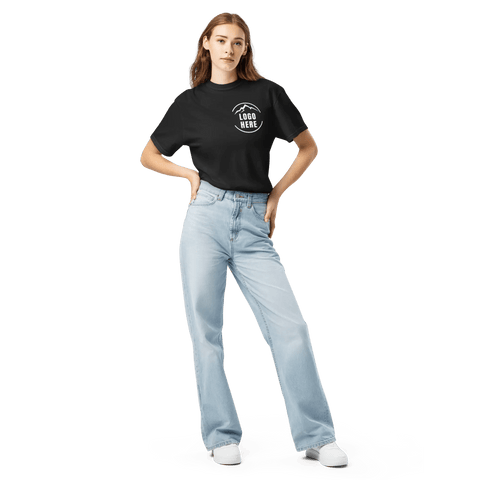
- Second, scale the logo down. The trend that built this brand is a small left-chest mark, embroidered or printed, with plenty of empty fabric around it.
- Third, let the blank be known. Putting "on Comfort Colors" in your internal merch announcement measurably changes how the drop is received, because the audience already knows what that means
Fourth, start small and test. We hold no minimums, so you can order a single embroidered 1717 to check the color and stitch before committing to a fifty-person run, and most orders ship in about 2 days with free U.S. shipping over $150. Fifth, think beyond the tee: the same garment-dyed look carries into crewnecks and hoodies for fall, which is where the embroidery trend is strongest.
Comfort Colors is one of several brands inside our custom spirit wear collection we stock and decorate.
What's coming in 2026: women's styles, hats, and bags
Comfort Colors turns 50 in 2026, and the brand is using the anniversary to expand: it previewed a 2026 collection with new silhouettes designed specifically for women, and reporting points to extensions into hats and bags alongside the core tees and fleece.3,4
The recent product moves show where this is heading. At the Impressions Expo, the brand rolled out new colors in the 3023CL women's boxy tee and the 6030 heavyweight pocket tee, added youth styles including a lightweight hooded sweatshirt, and even introduced a fleece dorm blanket.3 Each addition extends the same garment-dyed look into a new format, which means a business will soon be able to build an entire merch line, tee, crewneck, hat, tote, in one consistent washed-cotton aesthetic.
For merch planners, the 2026 expansion solves a real problem: matching. Today, pairing a garment-dyed tee with a hat usually means mixing brands and accepting a color mismatch. A single-source palette across categories makes a cohesive drop much easier to pull off. If you're planning a spring or fall 2026 merch refresh, it's worth building the line around this palette now and adding the new categories as they land. We'll be stocking them as they release into the print-on-demand and wholesale channels we work with.
What we're seeing at Arklavo
I run Arklavo, and in that time no blank has changed position the way Comfort Colors has. Two years ago it was a special request, the shirt a customer asked for by name because they'd seen it somewhere.
Now it comes up in a large share of our first conversations, and it's often the customer raising it, not us. Gym owners, breweries, school booster clubs, real estate teams: the buyer profiles are completely different, but the request is the same washed-out tee with a small logo.
The other shift I've noticed is what people put on it. Orders on standard tees still lean toward big front prints. Comfort Colors orders skew small: left-chest embroidery, a modest one-color print, a hit on the pocket area. Customers seem to understand instinctively that the shirt is doing part of the talking.
My honest advice is the same thing I tell anyone who asks: order one first. We don't hold minimums, so a single sample costs you almost nothing, and seeing the real garment-dyed color in person beats any screen preview. The shade you get is the shade that builds the whole drop.
How to order custom Comfort Colors gear
To put your logo on this trend, send us your design, approve a proof and a single sample on the real blank, then place the full run, with no minimums, free U.S. shipping over $150, and production that ships in about 2 days. We decorate the 1717 and its fleece siblings with embroidery, DTG, and heat press, and new customers can take no minimums a first order.
Pick a style and color first, mix blanks across one order if you need to, or skip straight to a quote with your logo attached. Either way, we'll confirm color, placement, and sizing before a single shirt gets stitched.
Ready to put your logo on the trend?
Send your logo and get a quote on custom Comfort Colors gear, no minimums.
Request a quoteComfort Colors trend FAQ
Sources
- CNBC, "Comfort Colors: This Gildan-owned T-shirt brand is popping up everywhere" (Oct 19, 2025): cnbc.com
- Gildan Activewear, "Gildan Activewear Announces Agreement to Acquire Comfort Colors for $100 million" (Feb 4, 2015): gildancorp.com
- Gildan Corporate News, "New Styles & Product Innovation at Impressions Expo" (Comfort Colors 50th anniversary, Pigment Pure, 2026 women's collection preview): gildancorp.com
- All Ag News, "Comfort Colors Leans on American Cotton, Expands Reach" (100% U.S. cotton, 2026 hats, bags, and women's fits): allagnews.com
- Merchize, "24 Trending Sweatshirt Embroidery Ideas" (small chest embroidery and tone-on-tone stitching trend): merchize.com
- Carolina-Made, Comfort Colors 1717 product specification (6.1 oz ring-spun U.S. cotton, garment-dyed, relaxed fit, S to 4XL): carolinamade.com
See the full range before you read on
Every style, current price and decoration option in one place, so you can shortlist while the detail is fresh.
No minimum order
Compare styles and prices in one place
Every blank, weight and decoration option side by side, with current listed prices.
The value pick from this guide
No minimum order. Free digital proof before anything is made.
No minimum order. See your logo on the real product first.
Every price is listed. Free proof before anything is made.
Ordering for a team?
Get a quote for your whole team
You have seen the prices already, so a quote here is arithmetic, not a sales call. Send your quantities, sizes and product and we total the program from the same listed prices in this guide. No setup fees, no minimums.
Get a QuoteWhy is Comfort Colors so popular right now?
Demand caught up with the product. The brand grew roughly 40% year over year in 2024 per Gildan executives, and U.S. Google search interest hit all-time highs in 2025. Gen Z drove the adoption, drawn to the garment-dyed vintage look, the heavyweight cotton, and the fact that nearly every shirt in the wild carries a custom design.
What makes Comfort Colors different from a regular tee?
Garment dyeing. Each shirt is sewn first and dyed afterward, which produces softer, washed-down colors with slight shade variation, plus a pre-shrunk, broken-in feel straight out of the bag. A regular tee is cut from fabric dyed in bulk before sewing, so it looks uniform and crisp instead.
What is the Comfort Colors 1717?
The 1717 is the brand's flagship heavyweight adult tee: 6.1 oz, 100% ring-spun preshrunk U.S. cotton, relaxed unisex fit, adult S through 4XL, with major wholesalers listing 70 or more garment-dyed colors. It's the style carrying most of the brand's current growth.
Does Comfort Colors work for embroidery?
Yes, and better than most tees. The 6.1 oz ring-spun fabric is dense enough to hold a small embroidered chest logo without puckering, which is why the small-logo embroidery trend grew up on this blank. It also takes DTG printing cleanly for larger or multicolor designs.
Is Comfort Colors a good choice for company or team merch?
If you want merch people wear voluntarily, yes. The blank costs more than a budget tee, but employees and customers already recognize and want it, so the wear rate is far higher. For one-day events and bulk giveaways, a cheaper heavy cotton tee still makes more sense.
Who owns Comfort Colors?
Gildan Activewear acquired Comfort Colors in February 2015 for approximately $100 million, when the brand was doing roughly $95 million in annual sales. It operates as its own brand, and most buyers don't associate it with Gildan at all.
What's new from Comfort Colors in 2026?
2026 marks the brand's 50th anniversary. It has previewed a 2026 collection with new silhouettes designed for women, added new colors in the 3023CL women's boxy tee and 6030 pocket tee, and reporting points to expansion into hats and bags.
Can I order custom Comfort Colors shirts with no minimum?
Yes. We hold no minimums at Arklavo, so you can order a single embroidered or printed 1717 to confirm the color and decoration before a full team run. Most orders ship in about 2 days, with free U.S. shipping over $150.
How should a business decorate a Comfort Colors tee?
Copy what is already working. Pick the washed-down shades driving the trend, such as pepper, blue jean, butter, moss and ivory, then keep the logo small and either stitched or cleanly printed with plenty of empty fabric around it. The trend that built this blank is a small left-chest mark, not a giant back print. The 6.1 oz fabric is heavy enough to hold a small embroidered chest design without puckering, and the dense ring-spun face also takes DTG cleanly.
How does the Comfort Colors 1717 compare to a standard heavy cotton tee?
The 1717 is 6.1 oz, 100% ring-spun US cotton, garment-dyed after sewing, and it arrives soft, preshrunk and broken-in with a relaxed, slightly boxy drape. A standard heavy cotton tee such as the Gildan 5000 is 5.3 oz open-end cotton, piece-dyed to a uniform solid color, crisp out of the bag and true to size with a classic straight cut. The 1717 is the premium blank for merch people choose to wear off the clock, while the heavier workhorse suits high-volume events and work tees at a lower unit cost.
Every price is on the page. No form first.
No minimums, no setup fees, free proof.
Get a free quote
Priced from the listed prices on this page
Request sent
Keep browsing while you waitThat did not send
Something blocked the request on our side. Send it through the quote page and we will pick it up there.
Open the quote page